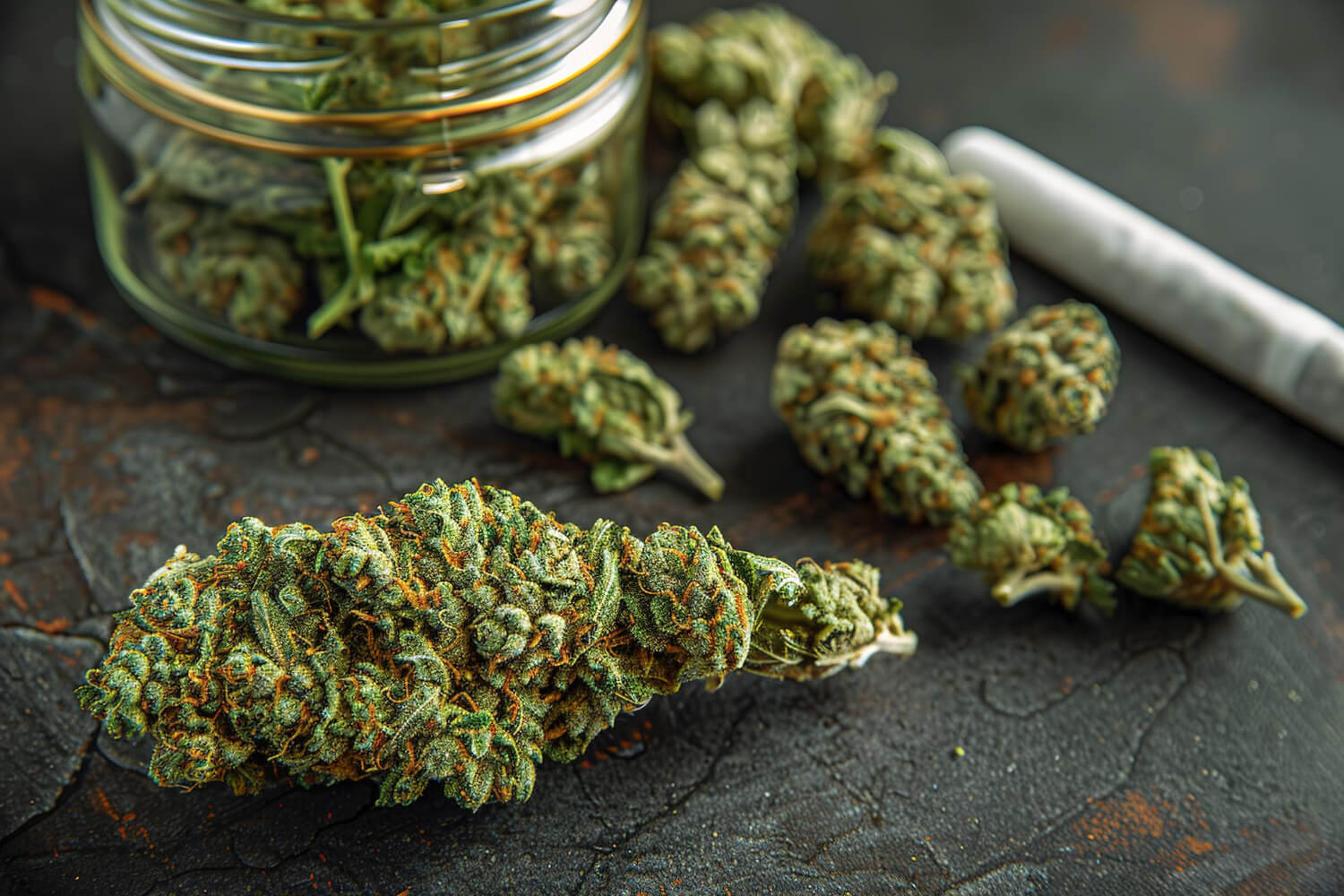
Quick Answer: Texas marijuana possession penalties in 2026 depend mainly on the amount involved and whether the substance legally qualifies as marijuana. Possession of two ounces or less is generally a Class B misdemeanor, while larger amounts can bring higher misdemeanor or felony charges. Texas also distinguishes marijuana from certain hemp-derived products and authorized low-THC medical cannabis.
What Are the Texas Marijuana Possession Penalties in 2026?
Texas generally treats recreational marijuana possession as a criminal offense. Under Texas Health and Safety Code §481.121, possessing a usable quantity of marijuana without legal authorization can result in a misdemeanor or felony, depending on the amount.
The statute establishes these punishment levels:
Amount possessed | Offense classification | Potential punishment |
2 ounces or less | Class B misdemeanor | Up to 180 days in county jail and a fine up to $2,000 |
More than 2 ounces, up to 4 ounces | Class A misdemeanor | Up to 1 year in county jail and a fine up to $4,000 |
More than 4 ounces, up to 5 pounds | State jail felony | 180 days to 2 years in state jail and a fine up to $10,000 |
More than 5 pounds, up to 50 pounds | Third-degree felony | 2 to 10 years in prison and a fine up to $10,000 |
More than 50 pounds, up to 2,000 pounds | Second-degree felony | 2 to 20 years in prison and a fine up to $10,000 |
More than 2,000 pounds | First-degree felony | 5 to 99 years or life in prison and a fine up to $50,000 |
These are the statutory punishment ranges. The outcome in an individual case depends on the evidence, applicable law, and court proceedings.
A marijuana charge Texas prosecutors file may also involve other allegations, such as delivery or possession in a drug-free zone. Those offenses have separate statutory requirements and penalties.
How Do Marijuana Possession Classes in Texas Work?
Marijuana possession classes in Texas depend primarily on the amount alleged under §481.121. The difference between a misdemeanor and felony can be significant, particularly when a charge carries possible state-jail or prison confinement.
The classifications are not simply labels. Each carries a different punishment range and potential consequences.
- Class B misdemeanor: Applies to possession of two ounces or less.
- Class A misdemeanor: Applies to more than two ounces but no more than four ounces.
- State jail felony: Applies to more than four ounces but no more than five pounds.
- Third-degree felony: Applies to more than five pounds but no more than 50 pounds.
- Second-degree felony: Applies to more than 50 pounds but no more than 2,000 pounds.
- First-degree felony: Applies to more than 2,000 pounds.
A conviction can also have consequences beyond the sentence. Depending on the circumstances, a criminal record may affect employment, education, housing applications, and certain professional opportunities.
Texas law also contains a limited emergency-assistance defense for certain lower-level possession cases. Under §481.121(c), specific requirements must be met when someone requests or receives emergency medical assistance for a possible overdose. The provision is not a general defense to every marijuana possession charge.
What Is the Texas THC Law Update for 2026?
The Texas THC law update for 2026 requires careful attention to the difference between marijuana, hemp, and hemp-derived products. These categories do not automatically receive the same treatment under Texas law.
Texas expanded its Compassionate Use Program through House Bill 46, effective September 1, 2025. The law expanded qualifying medical conditions and provided for additional dispensing organization licenses. It did not legalize recreational marijuana. <Cite refs={[“turn257973search11”]}/>
Another important development concerns delta-8 THC. The Texas Department of State Health Services reports that its scheduling action affecting delta-8 THC became effective July 31, 2026. DSHS explains that only naturally occurring trace amounts of delta-8 THC in the hemp plant are exempt from controlled status under the applicable clarification. <Cite refs={[“turn257973search3”]}/>
The distinction matters because a product’s retail label does not necessarily establish its legal status. The substance’s actual composition and applicable statutory definitions may matter.
In 2025, the Texas Legislature passed Senate Bill 3, which proposed broad restrictions on consumable hemp products containing certain cannabinoids. The governor vetoed that bill, so it did not become law. <Cite refs={[“turn257973search5”]}/>
Texas also adopted updated consumable-hemp rules in 2026. Those rules address matters such as manufacturing, distribution, retail sales, and product regulation. <Cite refs={[“turn257973search10”]}/>
Is Medical Marijuana Legal in Texas?
Texas permits limited medical use of low-THC cannabis through the Texas Compassionate Use Program (TCUP). This is a regulated program, not general permission to possess or use recreational marijuana.
House Bill 46 expanded the program beginning September 1, 2025. It broadened qualifying conditions and directed the Department of Public Safety to issue additional program licenses. <Cite refs={[“turn257973search11”]}/>
The program operates under specific eligibility and registration requirements. A person cannot assume that a medical diagnosis alone authorizes possession of any marijuana product.
Important distinctions include:
- Program eligibility: A patient must meet the program’s legal requirements.
- Prescribing clinician: A qualified physician must determine whether the patient qualifies under the program.
- Authorized products: The program regulates the types of low-THC cannabis products that may be dispensed.
- Registered dispensing organizations: Products must come through the authorized program framework.
- Recreational possession: TCUP does not create a general recreational-marijuana exception.
The legal status of a product depends on the program rules and the substance involved. A product sold elsewhere or labeled as medical cannabis does not automatically qualify for TCUP authorization.
What Can Affect a Marijuana Charge in Texas?
A marijuana possession allegation does not automatically establish guilt. Prosecutors must prove the required elements of the offense, including knowing or intentional possession of a usable quantity of marijuana.
Texas Health and Safety Code §481.002 defines possession as actual care, custody, control, or management. The evidence must connect the accused to the substance in the manner required by law.
Issues that may matter in a case include:
- Substance identification: Whether reliable testing establishes that the material meets the legal definition of marijuana.
- Quantity: Whether the alleged amount supports the charged classification.
- Possession: Whether the evidence establishes knowing or intentional control.
- Search and seizure: Whether law enforcement complied with applicable constitutional requirements.
- Legal authorization: Whether a valid statutory authorization or exception applies.
- Additional allegations: Whether prosecutors also allege delivery, a drug-free-zone offense, or another separate crime.
For example, a person may be present in a vehicle where officers find suspected marijuana. That fact alone does not necessarily establish that the person knowingly possessed it. The prosecution must prove the required connection through admissible evidence.
A lawyer reviewing a marijuana charge may examine the charging documents, laboratory information, and circumstances surrounding the investigation. The available legal issues depend on the facts and applicable statutes.
Pro Tip: Do Not Rely on a Product Label to Determine Its Legal Status
Texas distinguishes marijuana, hemp, and certain hemp-derived cannabinoids under different legal provisions. A label describing a product as hemp-derived or compliant does not, by itself, establish its legal classification. The applicable definitions and reliable testing evidence matter.
Frequently Asked Questions About Texas Marijuana Possession Penalties in 2026
Is marijuana possession still illegal in Texas in 2026?
Generally, yes. Recreational marijuana possession remains illegal under Texas Health and Safety Code §481.121, although authorized medical cannabis under TCUP is treated separately.
Is possession of two ounces of marijuana a felony in Texas?
No. Possession of two ounces or less is generally a Class B misdemeanor under §481.121. Possession of more than four ounces can result in a felony charge.
Did Texas legalize THC products in 2026?
No general legalization occurred. Texas regulates hemp-derived products separately, and DSHS reports that its delta-8 THC scheduling action took effect July 31, 2026.
Understand Texas Marijuana Possession Penalties in 2026
Texas marijuana laws continue to distinguish recreational possession, authorized medical cannabis, and regulated hemp-derived products.
- Amount matters: Possession penalties range from Class B misdemeanors to first-degree felonies.
- Product classification matters: Marijuana and hemp-derived products do not automatically receive identical treatment.
- The evidence matters: Substance identification, possession, and applicable authorization can affect a case.
If you are facing a marijuana possession allegation in Austin or Travis County, consider speaking with a Texas criminal defense lawyer about the charge and its potential consequences.
Gordon Law PLLC
600 W. 28th Street, Suite #106A
Austin, Texas 78705
Office: (512) 678-9333
Contact Gordon Law PLLC to discuss your circumstances and learn whether the firm may be able to assist.
Legal Disclaimer: This article is for general informational purposes only and does not constitute legal advice. Texas laws and regulations may change, and the application of a statute depends on the facts of each case. Reading this article does not create an attorney-client relationship with Gordon Law PLLC. Consult a qualified Texas attorney about your specific situation.