
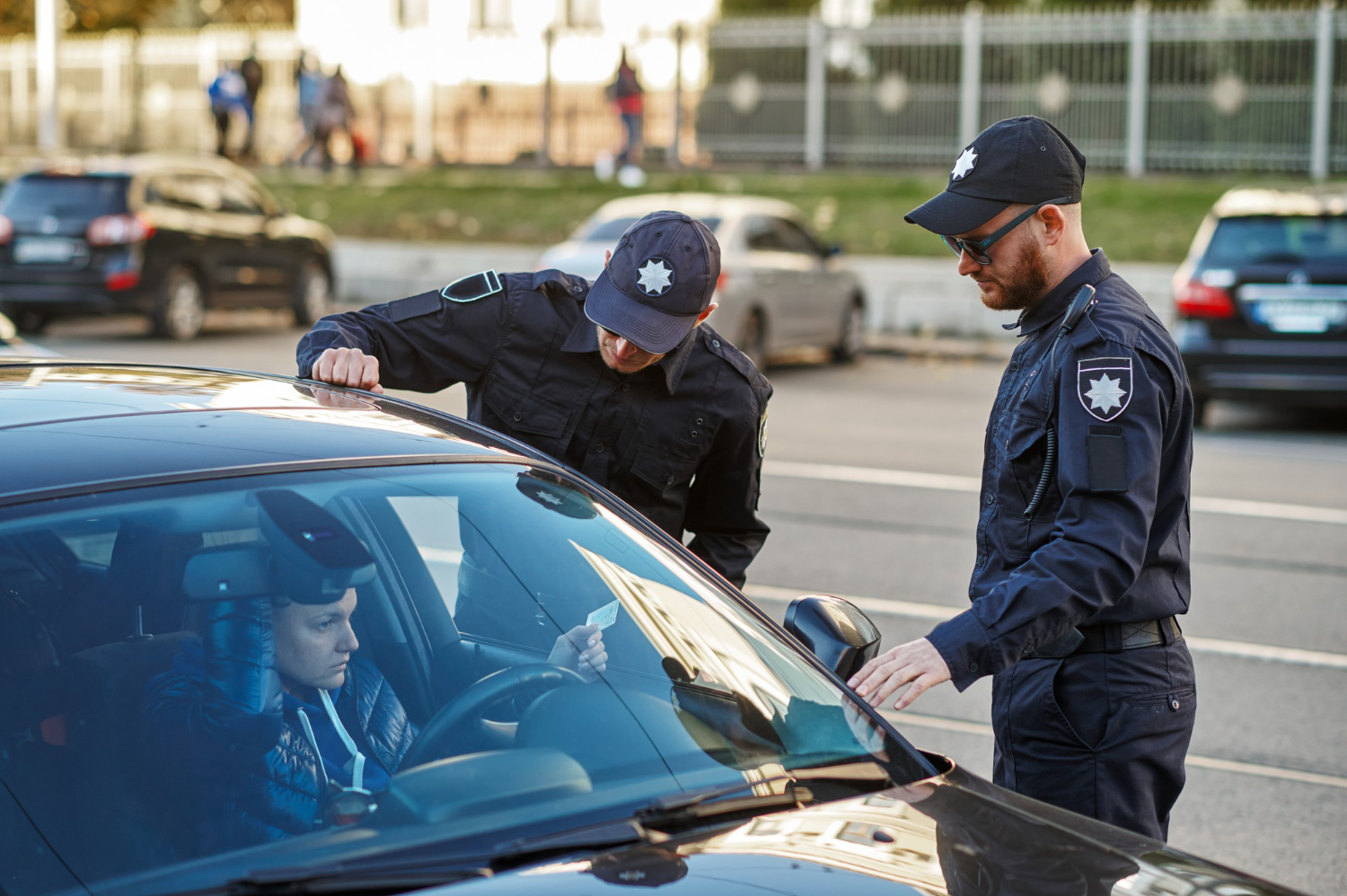
Holiday traffic enforcement can make an unexpected traffic stop stressful, especially when officers are looking for impaired drivers. An Austin Criminal Law Attorney can help you understand what police may lawfully do, what rights you have, and what steps to take if a holiday DWI investigation leads to an arrest.
One point is especially important in Texas: traditional sobriety checkpoints are not currently authorized. The Texas Court of Criminal Appeals held in Holt v. State that suspicionless DWI checkpoints were unconstitutional without an authorized statewide administrative scheme. Texas transportation-safety materials continue to identify sobriety checkpoints as unauthorized. (Justia Law)
That does not mean holiday DWI enforcement disappears. Police can use saturation patrols, traffic stops based on observed violations or reasonable suspicion, and other enforcement strategies. A stop that looks like a checkpoint may therefore involve a different legal basis.
Understanding that distinction can matter when evaluating a DWI case.
Are Holiday DWI Checkpoints Legal in Austin?
No. Texas does not currently authorize traditional sobriety checkpoints that randomly stop motorists to determine whether they are intoxicated. However, Austin police can conduct other types of targeted DWI enforcement when they have a lawful basis for stopping or detaining a driver.
The distinction comes from Texas case law.
In Holt v. State, the Texas Court of Criminal Appeals considered a DWI arrest arising from an Arlington sobriety checkpoint. The court held that, without an authorized statewide administrative scheme governing such checkpoints, the suspicionless seizure violated constitutional protections. (Justia Law)
Texas transportation-safety materials still state that sobriety checkpoints are not authorized and cite Holt as the controlling reason. (TxDOT)
That means drivers should understand the difference between these situations:
Type of enforcement | What it generally involves |
Sobriety checkpoint | Randomly stopping vehicles to screen for intoxication |
Saturation patrol | Concentrated police presence in areas where impaired driving is a concern |
Traffic stop | A stop based on an observed traffic violation or legally sufficient suspicion |
DWI investigation | Officer investigation after circumstances suggest possible impairment |
Holiday weekends may produce increased enforcement even though traditional DWI checkpoints remain unauthorized.
Police may patrol entertainment districts, highways, and other areas where impaired driving is considered a concern. An officer who observes a traffic violation can make a traffic stop and investigate further.
The legality of the encounter depends on what actually caused the stop, not simply what the police operation was called.
If officers appear to be stopping every vehicle without an individualized legal basis, document what happened and discuss the circumstances with an Austin Criminal Law Attorney.
What Should You Do If Police Pull You Over During a Holiday DWI Patrol?
Your best approach is to remain calm, comply with lawful instructions, and avoid volunteering information that is unnecessary to the traffic stop. Do not argue roadside about whether the officer has sufficient grounds for the stop.
During the encounter:
- Stay calm: Keep your hands visible and avoid sudden movements.
- Provide identification: Give officers documents they are legally entitled to request.
- Avoid unnecessary explanations: Do not volunteer a detailed account of where you were or what you consumed.
- Follow lawful commands: Do not physically resist or attempt to leave unless the officer permits you to do so.
- Ask about your status: You can ask whether you are free to leave.
- Request an attorney: If you are arrested, clearly invoke your right to counsel before answering substantive questions.
- Do not consent casually: If officers request a search, clearly state that you do not consent if that is your decision.
A traffic stop can quickly develop into a DWI investigation.
An officer may ask questions about alcohol consumption, request field sobriety tests, or seek a breath or blood specimen. The legal consequences of each step can differ.
Texas uses an implied-consent system for certain post-arrest breath and blood testing. DPS explains that refusing or failing to complete a qualifying test can lead to an administrative driver’s-license suspension. (Texas Department of Public Safety)
That makes it risky to rely on informal roadside advice such as “always refuse” or “always agree.”
The correct response can depend on the circumstances, the type of test requested, whether an arrest has occurred, and whether officers obtain a warrant.
Instead of trying to litigate the case on the shoulder of the road, focus on staying safe and preserving your legal options.
How Can an Austin Criminal Law Attorney Challenge a Holiday DWI Stop?
A DWI defense begins with examining the legality of the initial stop and then evaluating every stage of the investigation. If the police lacked a lawful basis for the stop, that issue may become central to the defense.
An attorney may examine:
- Reason for the stop: What specific fact caused the officer to initiate the traffic stop?
- Officer observations: What did the officer claim to see before beginning the DWI investigation?
- Body-camera footage: Does the video support or contradict the written report?
- Dash-camera footage: Does the recording show the vehicle’s driving before the stop?
- Field sobriety testing: Were instructions given correctly and were testing conditions appropriate?
- Statements: What did the driver say, and were statements obtained lawfully?
- Chemical testing: What procedures were followed for breath or blood testing?
- Search warrant: If police obtained blood through a warrant, what did the affidavit establish?
- Evidence handling: Can the State establish a reliable chain of custody?
The initial stop deserves particular attention.
Texas courts have distinguished lawful traffic-safety stops from suspicionless DWI checkpoints. In Stoppenbrink v. State, a Texas appellate court reiterated that DWI checkpoints are impermissible under Texas law absent the required statewide authorization. (Justia Law)
Consider a hypothetical holiday scenario.
Suppose officers establish a highly visible traffic operation outside downtown Austin. An officer stops a driver after observing an actual lane violation. The stop may be lawful even if the officer is participating in a broader holiday DWI initiative.
Now consider a different situation: officers appear to stop vehicles solely because they are passing through a designated location, without an individualized traffic violation or reasonable suspicion.
That distinction can substantially change the legal analysis.
The defense should therefore investigate why this particular driver was stopped, rather than simply accepting that the stop occurred during a holiday enforcement campaign.
What Happens to Your Driver’s License After an Austin DWI Arrest?
A DWI arrest can create a separate driver’s-license issue through Texas’s Administrative License Revocation program. The ALR process is civil and administrative, meaning it is separate from the criminal DWI prosecution. (Texas Department of Public Safety)
Potential consequences depend on the circumstances.
- Test refusal: A qualifying refusal after arrest can trigger an ALR suspension.
- Test failure: A qualifying BAC result can also trigger administrative action.
- Separate proceedings: The ALR matter does not simply disappear because the criminal case is pending.
- Hearing deadline: DPS generally requires a hearing request within 15 days after service of the applicable suspension notice in refusal cases. (Texas Department of Public Safety)
- Criminal case: The DWI prosecution proceeds separately through the appropriate criminal court.
- Possible appeal: DPS provides an appeal process for certain ALR decisions. (Texas Department of Public Safety)
This is one reason you should not put the paperwork aside after leaving jail.
The DPS explains that if an ALR hearing is not timely requested, the suspension can go into effect. Its current guidance also says an ALR hearing may take 30–60 days to schedule. (Texas Department of Public Safety)
The license issue can therefore require action before your criminal case reaches a meaningful court date.
Keep every document you receive after the arrest. Photograph the paperwork and note when each document was served or received.
Give those documents to your attorney immediately.
An Austin Criminal Law Attorney can determine whether your circumstances involve an ALR proceeding, a criminal DWI case, or both, and help identify applicable deadlines.
What Should You Do Immediately After a Holiday DWI Arrest?
The first few days after an arrest are an opportunity to preserve evidence and prevent avoidable mistakes. Write down what happened while your memory remains fresh, then provide the information to your attorney.
Use this checklist:
- Preserve paperwork: Keep the citation, release documents, suspension notice, and property records.
- Record the timeline: Write down where you were stopped, what happened before the stop, and when you were arrested.
- Save video: Preserve phone footage, security footage, or other recordings that may exist.
- Keep receipts: Restaurant, bar, rideshare, parking, and purchase records may help establish a timeline.
- Avoid social media: Do not post about the arrest or attempt to explain the incident publicly.
- Do not discuss the facts unnecessarily: Statements to friends or online contacts can create complications.
- Check license deadlines: Review any DPS paperwork immediately.
- Contact counsel: Provide your attorney with the complete set of documents and your timeline.
One practical example illustrates why preservation matters.
Suppose a driver is arrested after leaving a holiday gathering. The officer’s report says the driver appeared confused about where they had been. A rideshare receipt and restaurant receipt could establish a detailed timeline that may help counsel investigate the officer’s account.
That does not automatically defeat a DWI charge.
It does, however, give the defense additional evidence to evaluate.
The same principle applies to video. Body-camera footage may capture the driver’s speech, balance, demeanor, and interaction with officers. Dash-camera footage may show what happened immediately before the stop.
Your attorney can compare those recordings with the police report and other evidence.
Pro Tip: If you receive a DIC-25 or other ALR paperwork after a DWI arrest, photograph every page immediately and record the date you received it. DPS generally gives 15 days to request an ALR hearing in qualifying refusal cases. (Texas Department of Public Safety)
Frequently Asked Questions About Holiday DWI Stops in Austin
Are DWI checkpoints legal in Austin, Texas?
Traditional sobriety checkpoints are not currently authorized in Texas. Texas case law holds that suspicionless DWI checkpoints are unconstitutional without the required statewide administrative framework. (Justia Law)
Can police stop me during a holiday DWI enforcement operation?
Yes, if officers have a lawful basis for the traffic stop or detention. A holiday enforcement campaign does not automatically give officers unlimited authority to stop individual drivers without legal justification.
Should I contact an Austin Criminal Law Attorney after a DWI arrest?
Prompt legal advice can help preserve evidence and address both the criminal case and driver’s-license consequences. This is especially important when you receive an ALR notice because applicable hearing deadlines can be short. (Texas Department of Public Safety)
Conclusion
Holiday DWI enforcement can increase police presence throughout Austin, but a traditional suspicionless sobriety checkpoint is different from a lawful traffic stop or saturation patrol.
- Know the distinction: Texas does not currently authorize traditional DWI sobriety checkpoints.
- Protect your rights: Remain calm, avoid unnecessary statements, and preserve evidence.
- Act quickly: An ALR proceeding can create important driver’s-license deadlines separate from your criminal case.
If you were arrested or investigated for DWI in Austin, contact an Austin Criminal Law Attorney at (512) 678-9333 or visit 600 W. 28th Street, Suite #106A, Austin, Texas 78705 to discuss your circumstances and potential next steps.
This article provides general legal information, not individualized legal advice. DWI laws and procedures can change, and the specific facts of an encounter can affect the legal analysis.


